Antique Chinese Ceramics – Essential Websites for Identification and Research
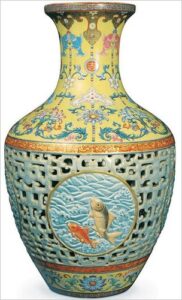
Identifying antique or more recent high quality Chinese porcelain and pottery is a complex and difficult area for collectors and dealers. The Chinese have been marking wares for earlier periods and copying pieces for centuries and this is especially a problem today with fakes proliferating in the market. Many less reputable auction houses routinely sell fakes of rare, high value porcelains and stoneware. Question marks even arise over some items sold at the highest end of the auction and retail world.
Here we provide an overview of the best online research tools for building your own knowledge and buying and selling with confidence in this fascinating and highly desirable area of collecting antiques.
BidAmount – A first class Chinese Antiques and Asian Art site run by American dealer, appraiser and auctioneer Peter Combs. He has hosted YouTube videos covering identification, auction news and Ebay round-ups for many years, and these are an indispensable learning resource
Alain R. Truong – The most prolific blog site on Chinese antiques with thousands of photos and descriptions. Alain is a Saigon native living in France and member of the Oriental Ceramics Society of France
https://gotheborg.com – The best online resource for Chinese and Japanese ceramic marks from antique to modern. Users can subscribe to access the full website tools and discussion board
https://koh-antique.com – Since 2001 this Singapore website devoted to Chinese ceramics has been adding informative content, mostly based on museum visits. Topics are very well illustrated with photos
National Palace Museum Taipei – Holds the largest collection of treasures from China’s 5000 year history. In terms of ceramics it has the world’s largest collection of Ru ware (21 pieces), the rarest and most coveted of all Song ceramics. Renowned for its extensive imperial collection from the Forbidden City. Select Open Data to browse a vast fully indexed catalogue of over 24,000 Chinese ceramics
Shanghai Museum – One of the major Chinese museums. The collection is in Chinese only but is listed in the two links here and here. Well over 2000 first class photos of ceramic items. Many ancient and early ceramics
British Museum London – Search thousands of excellently photographed Chinese items in the collection, including Chinese ceramics. Enter a search term in the search field
Victoria and Albert Museum London – The V&A has one of the most comprehensive and important collections of Chinese art outside East Asia, with pieces dating from 3000 BC to the present day. Excellent, well photographed, searchable and enlargeable collection
Metropolitan Museum New York Asian Collection – Searchable with professional enlargeable, all around photo galleries of items. A large and comprehensive collection
National Museum National Museum of Asian Art – Smithsonian Institution, Washington.
A searchable, and enlargeable indexed collection of over 13,000 objects
Asian Art Museum San Francisco – Asian Art Museum, San Francisco. The largest museum in the United States devoted exclusively to the arts of Asia. Over 13,000 items including the Avery Brundage Collection. Fully searchable with professional photos
Gardiner Museum Toronto – A world-renowned collection of ceramics. It lists over 330 fully described Chinese and Japanese ceramics here
Ashmolean Museum Oxford UK – Searchable collection with 400+ professional quality photos and over 3000 photos in total. Mostly complete pieces it appears, with many fragments also
Rijksmuseum Amsterdam – Search its Chinese collection with search terms, for example Qianlong vase. Excellent page layout with top quality, enlargeable photos
Harvard Art Museums – Comprising approximately 300 objects ranging from the 7th millennium BCE to the 12th century CE, the Walter C. Sedgwick Foundation collection. of early Chinese ceramics provides an extraordinary window onto China’s ancient past. This digital resource presents the Sedgwick collection in its entirety, along with an introduction to Chinese ceramics, scholarly essays, in-depth technical studies, and additional resources. This museum is particularly known for having the largest and finest assemblage of numbered Jun ware.